Blog

Why Handcrafted Products Support Artisan Livelihoods?

Why Handcrafted Products Support Artisan Livelihoods?

Why Handcrafted Products Support Artisan Livelihoods?

In a world dominated by fast production and factory-made goods, handcrafted products stand quietly yet powerfully apart. They carry stories, skills, and generations of knowledge within them. But beyond their beauty, there’s a deeper question worth asking: why handcrafted products support artisan livelihoods?

The answer goes far beyond economics. It’s about dignity, heritage, sustainability, and human connection.

The Human Hands Behind Every Handcrafted Product

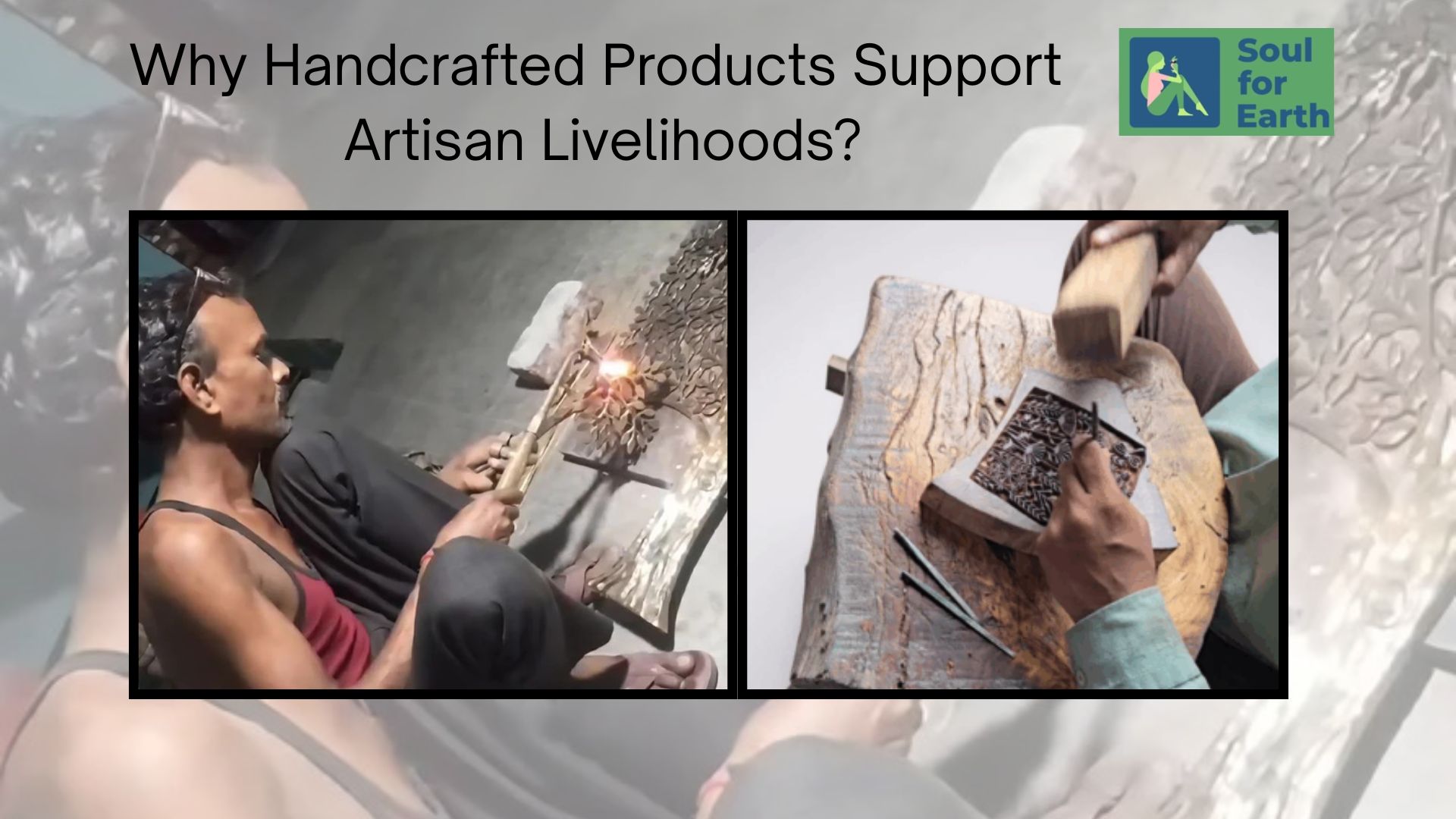
Every handcrafted product begins with a skilled artisan—not a machine. These artisans learn their craft over years, often passed down through generations. Whether it’s metalwork, wood carving, pottery, or weaving, these skills are deeply rooted in culture and tradition.

When someone chooses a handcrafted item, they are directly supporting the person who made it. Unlike mass-produced goods, where profits pass through multiple layers of corporations, handcrafted products ensure that value flows closer to the creator.

Fair Income Over Factory Wages

Artisans working in traditional crafts often struggle to compete with low-cost, factory-produced alternatives. Mass production prioritizes speed and volume, not skill or individuality.

Handcrafted products help change that equation.

When artisans receive fair compensation for their work:

  • They can sustain their families
  • They can continue practicing their craft
  • They are not forced to abandon traditional skills for low-paying labor

Supporting handcrafted products helps artisans earn fair wages for skilled work, not survival wages for repetitive labor.

Preserving Traditional Skills and Cultural Heritage

Many traditional crafts are at risk of disappearing. Younger generations often move away from artisan work because it no longer provides stable income.

When handcrafted products are valued and purchased:

  • Traditional skills remain relevant
  • Cultural techniques are preserved
  • Craft knowledge continues to be passed on

This is one of the strongest reasons why handcrafted products support artisan livelihoods—they give artisans a reason to keep their craft alive.

Empowering Rural and Marginalized Communities

Most artisans come from rural or semi-rural regions where employment opportunities are limited. Handcrafted production allows them to work from their own communities without migrating to cities.

This has powerful ripple effects:

  • Local economies grow
  • Families stay together
  • Women artisans gain financial independence
  • Communities become self-sustaining

Handcrafted products don’t just support individuals—they uplift entire ecosystems.

Slow Production Creates Sustainable Livelihoods

Unlike factories that depend on constant high-volume output, handcrafted production follows a slow, mindful process. This allows artisans to work at a humane pace without burnout or exploitation.

Slow production means:

  • Less pressure
  • Better quality
  • Longer-lasting products
  • Stable, ongoing work for artisans

Sustainability here is not just environmental—it’s human sustainability.

Reducing Dependency on Exploitative Middlemen

In traditional supply chains, artisans often receive only a small fraction of the final selling price due to multiple intermediaries.

Ethical handcrafted brands work directly with artisans, ensuring:

  • Transparent pricing
  • Better profit sharing
  • Long-term partnerships instead of one-time orders

This direct relationship strengthens trust and financial security for artisans.

Craft as Identity, Not Just Occupation

Lorem ipsum dolor sit amet, consectetur adipiscing elit. Ut elit tellus, luctus nec ullamcorper mattis, pulvinar dapibus leo.


For artisans, craft is not just a job—it’s identity, pride, and purpose. When handcrafted products are appreciated, artisans feel respected, not replaced.

Recognition matters as much as income. Knowing that someone values their work gives artisans confidence to continue creating and innovating within their tradition.

Lorem ipsum dolor sit amet, consectetur adipiscing elit. Ut elit tellus, luctus nec ullamcorper mattis, pulvinar dapibus leo.

Conscious Consumer Choices Make Real Impact

Every purchase is a choice. Choosing handcrafted over mass-produced sends a clear message:

  • Skill matters
  • People matter
  • Culture matters

One handcrafted product may seem small, but multiplied by thousands of conscious buyers, it becomes a powerful force for change.

That is exactly why handcrafted products support artisan livelihoods—because consumers play an active role in shaping ethical markets.

The Role of Responsible Brands

Brands that focus on handcrafted products act as bridges between artisans and modern consumers. They help present traditional crafts in contemporary forms while maintaining authenticity.

Companies like Soul for Earth collaborate with skilled artisans to create meaningful décor and gifting products while ensuring ethical practices and respect for craftsmanship.

Such brands help artisans reach wider audiences without compromising their values.

More Than a Product—A Relationship

When you buy handcrafted, you’re not just buying an object. You’re entering a silent relationship with the person who made it. Their time, skill, and story become part of your space.

That emotional connection is something mass production can never replicate.

Final Thoughts

So, why handcrafted products support artisan livelihoods?
Because they honor skill over speed.
Because they value people over profit.
Because they preserve culture while building sustainable futures.

Handcrafted products keep traditions alive, empower communities, and remind us that behind every beautiful object, there is a human story worth supporting.

Choosing handcrafted is not just a style choice—it’s a conscious, compassionate one.

Leave a Reply

Your email address will not be published. Required fields are marked *